EFSD Presents Assessment of Central Asian Labor Markets at EDB Forum
The Eurasian Fund for Stabilization and Development (EFSD, the Fund) took part in the Eurasian Development Bank's (EDB’s) Annual Meeting and Business Forum, Eurasia 2030+: Investment, Growth and New Opportunities, which this year brought together government bodies, businesses, investors, international financial institutions, and the expert community.
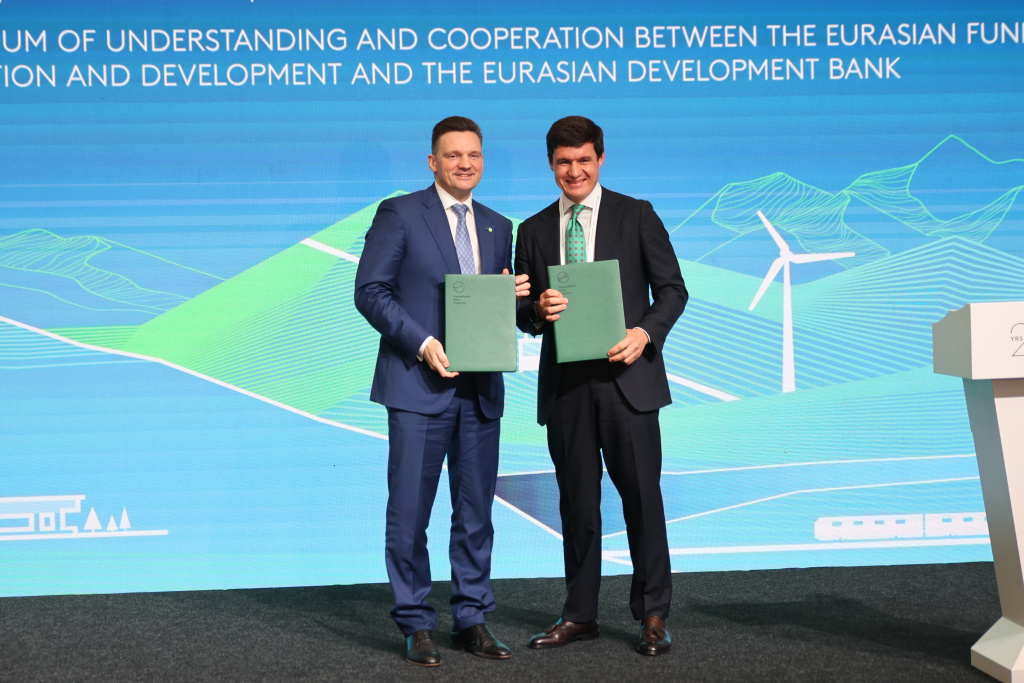
On the sidelines of the forum, EFSD and EDB signed a Framework Memorandum of Understanding aimed at further strengthening cooperation between the two organizations in support of sustainable economic growth across their member countries. The document provides for collaboration in several key areas, including support for technical assistance projects and programs, the exchange of analysis and expertise, joint research, and the development of partnership initiatives.
"EFSD's participation in the EDB Forum is especially meaningful for us. We congratulate the Eurasian Development Bank on its 20th anniversary and highly value the partnership our organizations have built over the years. The memorandum creates new opportunities for joint initiatives and deeper cooperation in research. A clear example of this partnership was the presentation of the findings of EFSD's first flagship report on labor markets on the sidelines of the Forum. The full report will be presented at the EFSD International Economic Conference in Astana on October 29, 2026," said Iaroslav Mandron, EFSD Managing Director.
During the forum, EFSD experts presented the findings of the Fund's first flagship study on the labor markets of Armenia, Kazakhstan, Kyrgyzstan, and Tajikistan. According to the assessment, Central Asian countries retain significant demographic potential and will remain among the few regions in the world with sustained growth in the working-age population, even as populations age across most advanced economies.
By 2040, the projected increase in the employed population relative to 2025 could reach 1.9 million people in Kazakhstan, up to 1 million in Kyrgyzstan, and up to 2.1 million in Tajikistan. Against this backdrop, the key challenge facing the region is creating enough high-productivity jobs to absorb its growing workforce.